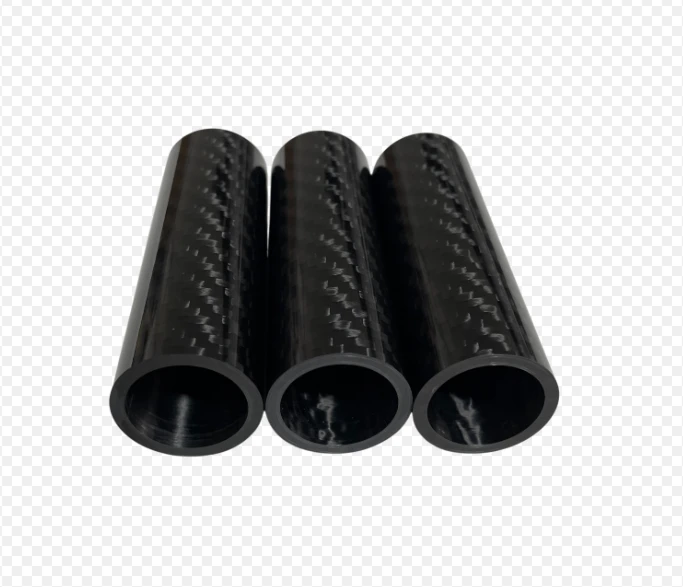
Custom T300 T700 Carbon Fiber Tube for Industrial Automation
If you are replacing an aluminum or steel tube in an automation machine, robotic arm, drone, or lightweight structure, the first question is usually not "Which carbon fiber tube looks better?"
It is whether the tube can actually fit the equipment, carry the required load, maintain enough stiffness, and be produced repeatedly at the quantity you need.
This is where custom carbon fiber tubing becomes important.
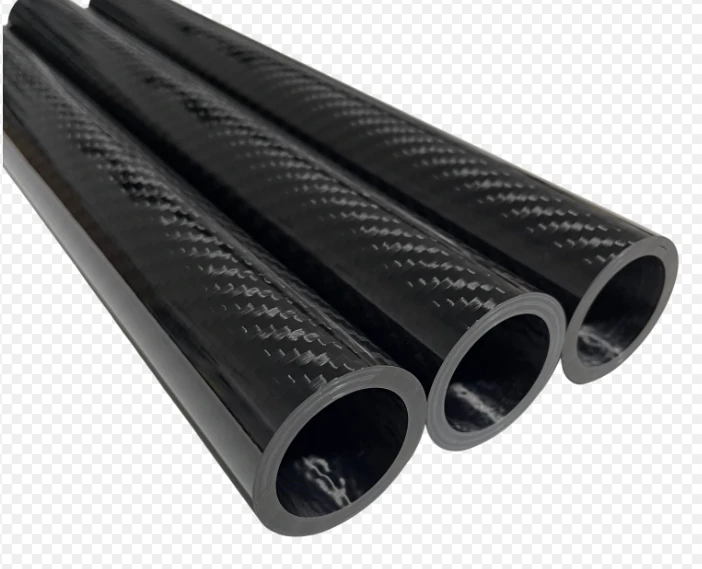
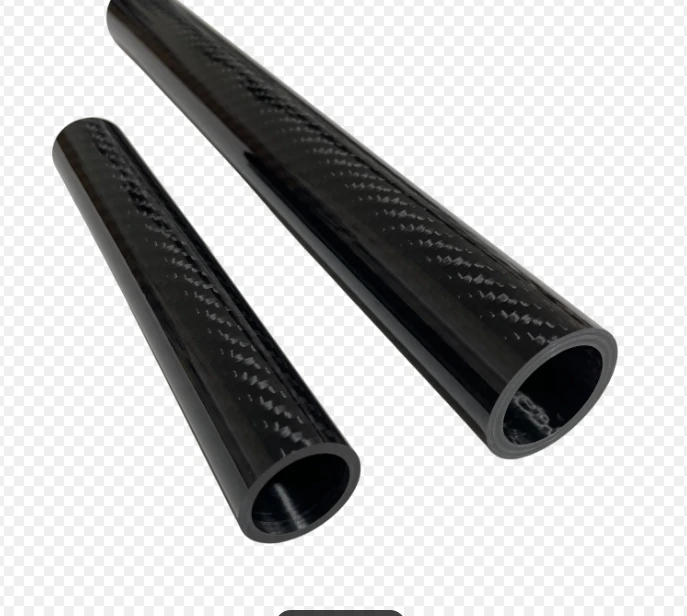
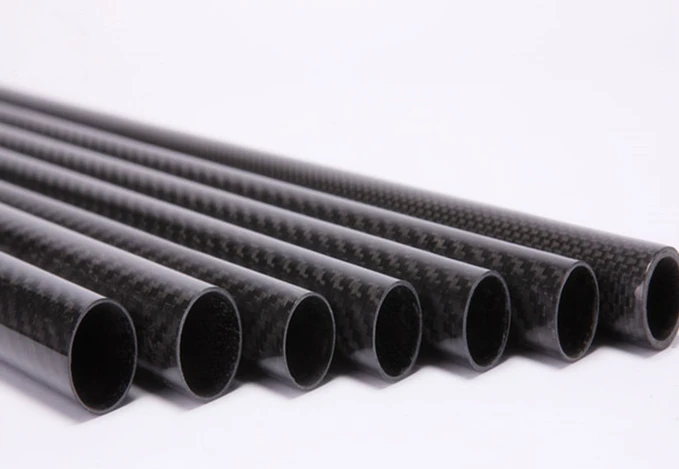
We manufacture T300 and T700 carbon fiber tubes for customers who need specific diameters, wall thicknesses, lengths, surface finishes, and machining requirements. Our typical tube range is from 6 mm to 300 mm outside diameter, with wall thicknesses from 0.5 mm to 10 mm and lengths up to approximately 3000 mm, depending on the tube design and production method.
If you already have a drawing, CAD file, or sample, we can review it directly. If you only know the required diameter, length, and application, we can start from those basic requirements and discuss the available construction.
A Carbon Fiber Tube Is More Than Just a Carbon Fiber Product
A common mistake when sourcing carbon fiber tubes is comparing products only by carbon fiber grade.
For example, a buyer may ask for a T700 carbon fiber tube because T700 has a higher tensile strength at the fiber level than T300.
That does not automatically mean that a T700 tube will be the best construction for the finished component.
The performance of a finished carbon fiber composite tube also depends on the tube diameter, wall thickness, fiber orientation, resin system, fiber volume fraction, curing process, and the direction of the applied load.
For a tube used as a robotic arm, the requirements may be very different from a tube used as a drone boom or a stationary support.
That is why we normally ask about the application before confirming a custom specification.
Why Engineers Choose Carbon Fiber Tubes
Weight Reduction Without Using a Solid Structure
The hollow design of a carbon fiber tube allows material to be positioned around the outer diameter instead of filling the entire cross-section.
This makes a hollow carbon fiber tube useful when the designer needs a lightweight structural member with good bending stiffness.
Typical applications include robotic arms, lightweight machine frames, long support members, sensor arms, drone booms, and other structures where component weight matters.
For moving equipment, this can be particularly relevant because the structural component itself becomes part of the moving mass.
Stiffness Matters as Much as Strength
When customers tell us that they need a "strong" carbon fiber tube, we usually ask what kind of load the tube will actually see.
A tube may be exposed primarily to:
Bending
Compression
Tension
Torsion
Combined loading
The fiber layup can then be designed around the main load directions.
For example, a tube that mainly works as a bending member may require a different construction from a tube that experiences significant torsional loading.
This is one of the practical differences between buying a generic carbon fiber tube and developing a tube for a specific machine.
Low Weight for Automation and Robotics
In industrial automation, component weight can affect the mechanical design of the complete system.
A lighter arm or support structure may reduce the moving mass that the drive system has to accelerate and decelerate.
For this reason, carbon fiber tubes for industrial automation are often considered for robotic arms, moving beams, sensor supports, machine vision systems, and lightweight structural assemblies.
The actual benefit depends on the complete machine design, so we do not promise a specific increase in speed or efficiency without testing the finished equipment.
Resistance to Corrosion
Carbon fiber composite does not rust like conventional steel.
This can make carbon fiber tubing useful in applications where moisture or corrosion is a concern.
However, the complete environmental performance depends on more than the carbon fiber itself.
Resin selection, temperature, chemicals, surface protection, joints, and exposure time can all affect service performance.
If the tube will be exposed to salt water, chemicals, high humidity, or elevated temperatures, this information should be included when requesting a quotation.
T300 or T700: Which Carbon Fiber Tube Should You Specify?
This is one of the questions we receive regularly.
T300 Carbon Fiber Tube
T300 is widely used in general carbon fiber composite applications and can be suitable where the project requires a balance between mechanical performance and material cost.
It is often considered for:
General structural components
Automation equipment
Lightweight frames
Supports
Machinery components
Sports equipment
T700 Carbon Fiber Tube
T700 is generally associated with higher tensile strength at the fiber level and can be considered for applications with higher strength requirements.
It may be used for:
Higher-load structural components
Robotic structures
Lightweight mechanical components
UAV structures
High-performance composite parts
The important point is that T700 does not automatically make the finished tube twice as strong as a T300 tube, nor does the fiber grade alone determine the final mechanical properties.
The finished tube must be evaluated as a complete composite structure.
| Requirement | T300 | T700 |
|---|---|---|
| General structural use | Suitable | Suitable |
| Higher fiber tensile strength | - | Advantage |
| Lightweight construction | Yes | Yes |
| Custom diameter | Available | Available |
| Custom wall thickness | Available | Available |
| Custom fiber orientation | Available | Available |
| Industrial automation | Suitable | Suitable |
| Robotics | Suitable | Suitable |
| Prototype production | Available | Available |
| Mass production | Available | Available |
If you are unsure which grade to use, send us the dimensions and application. We can discuss the options before you place the order.
Carbon Fiber Tube Specifications
Our standard production range includes the following:
| Specification | Available Range |
|---|---|
| Product | Carbon Fiber Composite Tube |
| Outer Diameter | 6–300 mm |
| Wall Thickness | 0.5–10 mm |
| Length | Up to 3000 mm |
| Material | T300 / T700 / T800* |
| Inner Diameter | Custom |
| Fiber Orientation | Custom |
| Surface | Matte / Glossy |
| Pattern | 3K Plain / 3K Twill |
| Color | Black / Custom |
| Cutting | Custom Length |
| Drilling | Available |
| End Machining | According to Drawing |
| Packaging | Standard / Custom |
*Availability depends on the required structure and production method.
For a custom quotation, please do not specify only "T700 carbon fiber tube."
A useful specification would look more like:
T700 / OD 30 mm / Wall Thickness 2 mm / Length 1000 mm / Matte Surface / 200 pcs
If you have a drawing, that is even better.
Custom Carbon Fiber Tube Manufacturing
Most of our custom projects start in one of three ways.
The customer has a drawing
This is the easiest situation.
Send us the drawing or CAD file and we can review the dimensions, tolerances, machining requirements, and production feasibility.
The customer has an existing sample
We can evaluate the sample and discuss whether it can be reproduced.
This is useful when the original supplier has stopped producing the part or the customer is looking for an additional manufacturing source.
The customer only has basic dimensions
This is also workable.
For example, you may only know that you need:
Ø40 mm × 2 mm wall × 1200 mm length
and that the tube will be used for an automation arm.
We can start the technical discussion from these requirements.
Custom Mold and Tooling
Non-standard carbon fiber tubes may require dedicated tooling.
Before opening a mold, we review the tube dimensions, geometry, quantity, production method, and expected annual demand.
A typical development process is:
Drawing / Sample
→ Engineering Review
→ Tooling Confirmation
→ Prototype
→ Inspection
→ Customer Approval
→ Production
→ Final Inspection
For repeat orders, dedicated tooling can help maintain consistency between production batches.
The tooling cost and development time depend on the actual design, so we confirm these details after reviewing the drawing.
Carbon Fiber Tube for Industrial Automation
Automation equipment is one of the applications where the characteristics of carbon fiber tubing can be particularly useful.
Our tubes can be considered for:
Robotic arms
Pick-and-place systems
Moving beams
Sensor arms
Machine vision structures
Lightweight machine frames
End-effectors
Support structures
Linear motion equipment
For these applications, we recommend looking at the complete mechanical requirement rather than selecting the tube based only on diameter.
A longer tube, for example, may require more attention to stiffness and deflection than a short tube carrying the same load.
Carbon Fiber Tubes for Robotics
Robotic applications often require low structural weight combined with adequate stiffness.
A carbon fiber structural tube can be used as an arm, boom, support, or other structural member.
When evaluating a robotic tube, useful information includes:
Tube length
Outside diameter
Wall thickness
Payload
Mounting position
Bending load
Torsional load
Required deflection
Operating speed
Operating environment
This information allows the tube to be evaluated according to the actual application instead of simply choosing the thickest available tube.
Surface Finish and Appearance
For visible components, appearance can also be important.
We can offer different surface finishes depending on the production method and product requirements.
Common options include:
3K Plain Weave
A traditional woven carbon fiber appearance.
3K Twill Weave
A diagonal woven pattern commonly used for visible carbon fiber components.
Matte Finish
A lower-reflection surface suitable for many industrial applications.
Glossy Finish
A smoother reflective appearance for applications where surface appearance is important.
Standard carbon fiber tubes are normally black, while custom colors can be discussed for suitable applications.
Cutting and Machining
A finished tube does not always arrive as a simple straight section.
Customers may require:
Fixed-length cutting
Drilled holes
End trimming
Slots
Special end processing
Assembly preparation
We can review these requirements based on drawings.
For precision machining, please provide the required dimensions and tolerances before production.
This is important because machining carbon fiber composite requires different considerations from machining aluminum or steel.
Quality Control
For industrial buyers, dimensional consistency is usually one of the first things that matters after the initial sample is approved.
Our inspection process can include:
Dimensional Inspection
Depending on the product, we check:
Outer diameter
Inner diameter
Wall thickness
Length
Straightness
Surface Inspection
The finished tube is visually checked for obvious surface defects, damage, cracks, and abnormal appearance.
Process Control
Production parameters are monitored during the manufacturing and curing process.
Final Inspection
Finished products are checked against the approved drawing or product specification before shipment.
If your project requires specific mechanical testing, dimensional tolerances, or third-party inspection, please tell us before production so that the inspection requirements can be included in the project.
More Than 10 Years of Carbon Fiber Manufacturing Experience
We have been working with carbon fiber composite products for more than 10 years.
Over the years, one thing has remained consistent: custom carbon fiber products require communication between the customer and manufacturer.
A drawing may show the outside diameter and length, but it may not explain how the tube is loaded.
A material specification may say T700, but it may not specify the required stiffness.
A sample may look correct on the outside but still require a different internal construction for another application.
Our role as a manufacturer is therefore not simply to quote a material and size. We review the available information and identify the production requirements before confirming the final product.
This approach is particularly useful for overseas customers who cannot easily visit the factory during the development stage.
Sample Development
For standard or relatively simple custom samples, our typical sample lead time is around 7–15 days.
The actual time depends on:
Product dimensions
Tooling requirements
Material availability
Surface finish
Machining
Quantity
Inspection requirements
For new molds or complicated structures, the development period may be longer.
We confirm the production schedule after reviewing the actual specification instead of giving a fixed lead time before the technical requirements are known.
Packaging for International Shipment
Long carbon fiber tubes need suitable protection during transportation.
Our standard packaging can include:
PE film
Bubble wrap
Protective end caps
Reinforced cartons
Pallets
Wooden cases for long or large-volume shipments
The packaging method can be adjusted according to tube length, quantity, destination, and transportation method.
We can arrange shipping by:
DHL / FedEx / UPS / Air Freight / Sea Freight
Shipping terms can be discussed according to the customer's requirements.
Frequently Asked Questions
Can you make a carbon fiber tube according to our drawing?
Yes.
Send us the drawing or CAD file. We can review the dimensions, material, tolerances, machining requirements, quantity, and production feasibility.
I don't know whether I need T300 or T700. Can you help?
Yes.
Please provide the tube diameter, length, wall thickness if known, application, approximate load, and quantity.
These details are more useful for material selection than choosing a carbon fiber grade alone.
What is the largest carbon fiber tube you can make?
Our typical outer diameter range is 6 mm to 300 mm, with lengths up to approximately 3000 mm.
Special sizes can be reviewed according to the manufacturing method and product design.
Can you make thin-wall carbon fiber tubes?
Our typical wall thickness range starts from approximately 0.5 mm.
The minimum practical wall thickness depends on tube diameter, length, manufacturing method, handling requirements, and application.
Can you make a tube with a specific inner diameter?
Yes.
The inner diameter can be customized according to the required outer diameter and wall thickness.
Can you cut the tube to our required length?
Yes.
Custom length cutting is available.
Please provide the finished length and required tolerance if applicable.
Can you reproduce an existing carbon fiber tube?
Yes.
If you have an existing sample, we can review the dimensions and appearance and discuss the possibility of reproducing the product.
Do you provide custom molds?
Yes.
For suitable custom projects, we can provide tooling development based on the required tube dimensions and production method.
What information should I send for a quotation?
The following information is enough to start:
Diameter + Wall Thickness + Length + Material + Quantity + Application
A drawing or sample is preferred when available.
What is the MOQ?
MOQ depends on the tube size, tooling requirement, manufacturing process, and order quantity.
Please send us your required quantity and we will confirm the production arrangement.
How long does a sample take?
Simple samples can typically be completed within 7–15 days.
Custom tooling, special structures, and additional inspection requirements may require more time.
Get a Custom Carbon Fiber Tube Quote
If you are sourcing a custom carbon fiber tube manufacturer for industrial automation, robotics, machinery, drones, or other lightweight structures, send us the specifications you currently have.
You do not need to have every detail finalized.
A drawing is useful.
A sample is useful.
Even a simple message such as:
"T700 carbon fiber tube, OD 50 mm, length 1200 mm, approximately 2 mm wall thickness, 100 pcs for robotic equipment."
is enough for us to start the discussion.
We can then review the material, dimensions, construction, tooling, sample requirements, production lead time, and packaging.
Send us your drawing or requirements for a custom carbon fiber tube quotation.
Hot Tags: filament wound carbon round tube, custom sized t300 t700 composite hollow tube, China filament wound carbon round tube, custom sized t300 t700 composite hollow tube manufacturers, suppliers, factory
We produce carbon fiber tubes by filament winding process, supporting T300 and T700 carbon fiber raw materials. We can make round hollow tubes with OD from 6mm up to 300mm. Wall thickness ranges from 0.5mm to 10mm. Max cutting length can reach 3000mm. Surface options include 3K plain weave and 3K twill weave, matte or glossy finish. We accept custom drawings and samples. For non-standard sizes, we can build new molds. Our QC team checks dimension, surface and straightness one by one before shipment. Samples are available for your testing. The sample lead time is about 7-15 working days. We pack carbon tubes with bubble film and hard export cartons to prevent scratches and breakage during transit. We can ship goods via DHL, FedEx, UPS or sea freight based on your request. If you have any technical questions about material selection or structure design, our engineer team can offer support.